
Common Mistakes When Performing a Chlorine Test
- Posted on August 5, 2026
Common mistakes when performing a chlorine test include using expired or improperly stored reagents and mismatched kit components that bias results. Improper sample collection Chloride test, exposure to air or light Chloride test, and slow transport cause loss or contamination. Skipping precise reaction and incubation times, or not recording lot numbers and conditions, undermines traceability. Unrecognized interferents like oxidizers, nitrites, high pH, or colored organics can skew readings unless controlled. Follow corrective steps and verification methods to improve accuracy, and further guidance explains how.
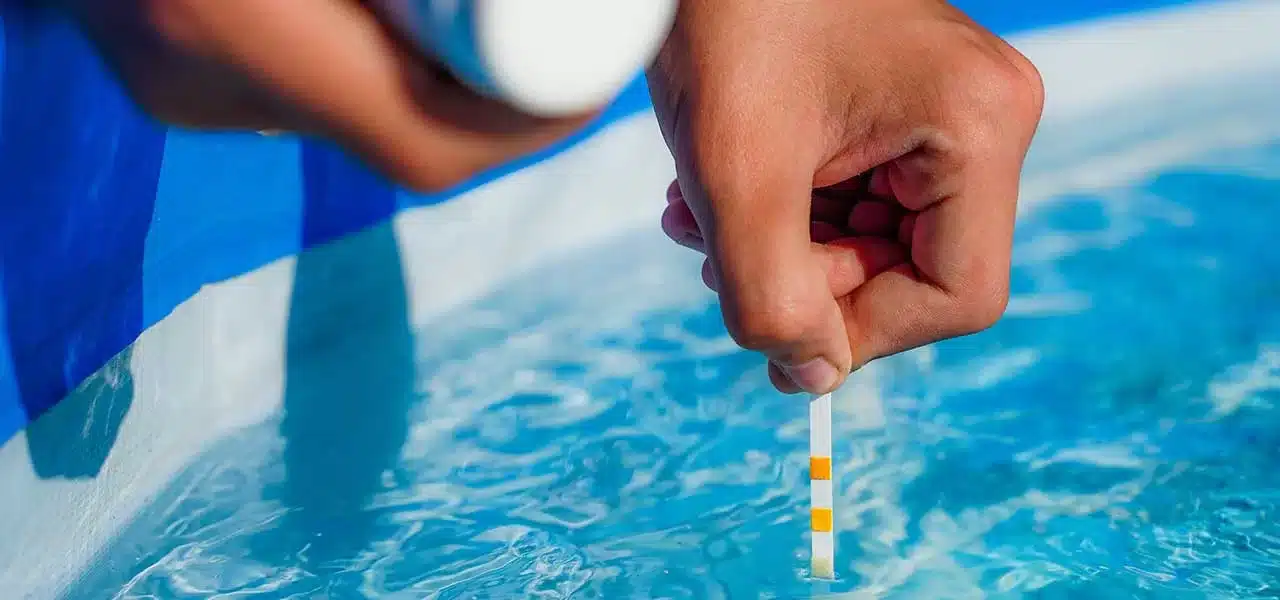
Quick Checklist: Top Chlorine Testing Fixes to Try First
A concise checklist helps identify and correct the most common chlorine testing errors quickly. The checklist prompts verification of sample source, verifying collection away from splashes https://laballiance.com.my/, aeration, or recent chemical additions.
It reminds the tester to confirm container cleanliness and appropriate fill level to avoid dilution or surface effects. The list includes ambient condition checks—temperature and light—that can skew results, and guarantees instruments are stable and reading zero before use.
It directs confirmation of correct sample mixing and immediate testing timelines to prevent decay. It advises recording batch numbers, timestamps, and observable anomalies for traceability.
This compact, practical approach empowers testers to act decisively, reduce guesswork, and preserve accurate, actionable chlorine readings.
Check Reagents, Kits, and Timing Before Chlorine Testing
Before starting any chlorine measurement, confirm that reagents are unexpired, stored per manufacturer instructions, and matching the kit model to prevent systematic bias. The tester should inspect reagent clarity, color, and seals; degraded or precipitated chemicals yield inaccurate readings.
Verify kit calibration status and compare lot numbers when substituting components. Allow reagents and instruments to reach ambient temperature to stabilize reaction kinetics.
Follow specified reaction and incubation times precisely; rushing or overextending intervals skews results. Use timers and record timestamps to support reproducibility and freedom to audit decisions.
Keep spare certified reagents on hand to avoid improvised substitutions. Routine proficiency checks and adherence to manufacturer guidance preserve data integrity and empower operators to make confident, independent decisions.
Collect and Store Chlorine Samples to Avoid Contamination
Proper sample collection and storage prevent external contamination and preserve true chlorine concentrations for accurate testing. The collector should use clean, inert containers, rinsed with sample water, and avoid hands or ungloved contact.
Samples must be capped immediately to limit air exchange and light exposure, which can alter chlorine levels. Containers should be labeled with time, location, and collector details to maintain traceability.
Transport in insulated, dark carriers at stable temperatures and analyze promptly; delays increase degradation. Do not add preservatives unless specified by protocol, and avoid sampling near disinfection points, drains, or turbulence that skew readings.
Attention to these steps safeguards autonomy in decision-making by ensuring test data reflect the real condition.
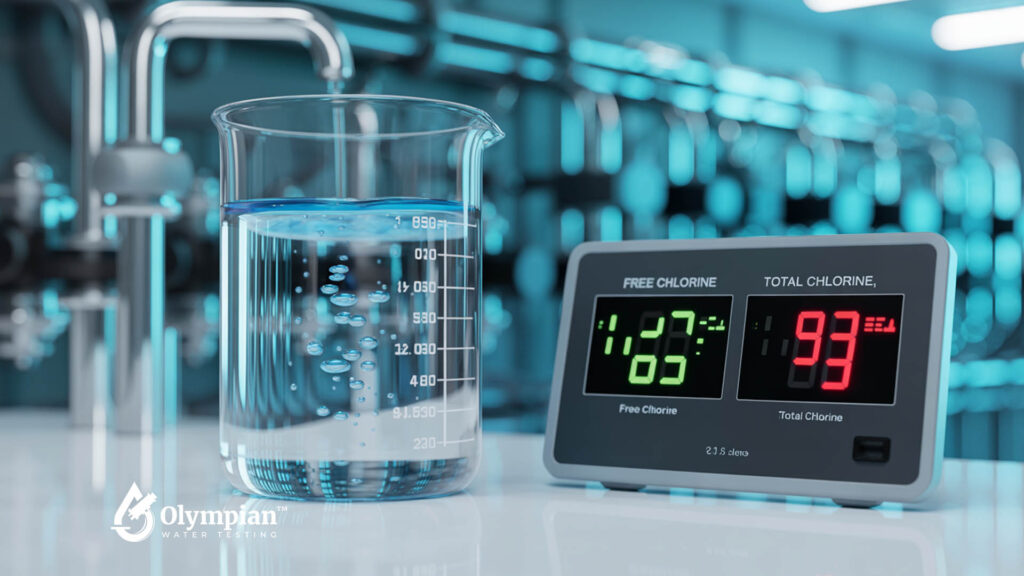
Follow Reaction Times and Procedures Exactly : Then Verify
After samples are collected and secured, attention shifts to timing and protocol adherence during reagent reactions. The tester must follow specified reaction times and step sequences without improvisation; deviations produce unreliable results. Procedures exist to guarantee reproducibility, so strict adherence preserves the tester’s autonomy to trust measurements.
After completing timed reactions, verification through repeat measurement or a secondary method confirms accuracy. Records of times, reagent lot numbers, and environmental conditions empower independent judgment and freedom from uncertainty.
- Observe and enforce the exact reaction time indicated by the method.
- Document each step, timepoint, reagent, and ambient condition for traceability.
- Confirm results by repeating the test or using an approved backup procedure.
Verification protects results and the freedom to act on them.
Spot and Correct Interferences That Skew Chlorine Readings
How can a tester reliably distinguish true chlorine from signals produced by other substances? A vigilant tester scans for common interferents: high pH, oxidizers like ozone or permanganate, nitrites, and organic colorants that mimic free or total chlorine.
They isolate variables by running blanks, dilutions, and reagent controls, and by testing known standards to confirm reagent integrity. When interferences appear, corrective steps include sample filtration, pH adjustment, using alternative reagents selective for free or combined chlorine, or employing orthogonal methods such as amperometry or DPD-based spectrophotometry.
Documentation of corrective actions preserves traceability. Empowered testers prioritize independence from misleading readings, applying methodical checks to ensure decisions about disinfection remain grounded in reliable, interference-free measurements.
Conclusion
In conclusion, routine chlorine testing demands attention to simple but critical details to guarantee reliable results. Inspecting reagents and kits, timing sample collection and analysis correctly, and preventing contamination during storage markedly reduce errors. Strict adherence to reaction times and procedures, coupled with verification steps, helps confirm findings. Identifying and correcting chemical or physical interferences prevents misleading readings. Together, these practices create a dependable chlorine-monitoring routine that safeguards water quality and public health.
Common mistakes when performing a chlorine test include using expired or improperly stored reagents and mismatched kit components that bias results. Improper sample collection Chloride test, exposure to air or light Chloride test, and slow transport cause loss or contamination. Skipping precise reaction and incubation times, or not recording lot numbers and conditions, undermines traceability.…